






Safety Workshop

March 2026 Community Event

Bridging the gap between leadership and the field.

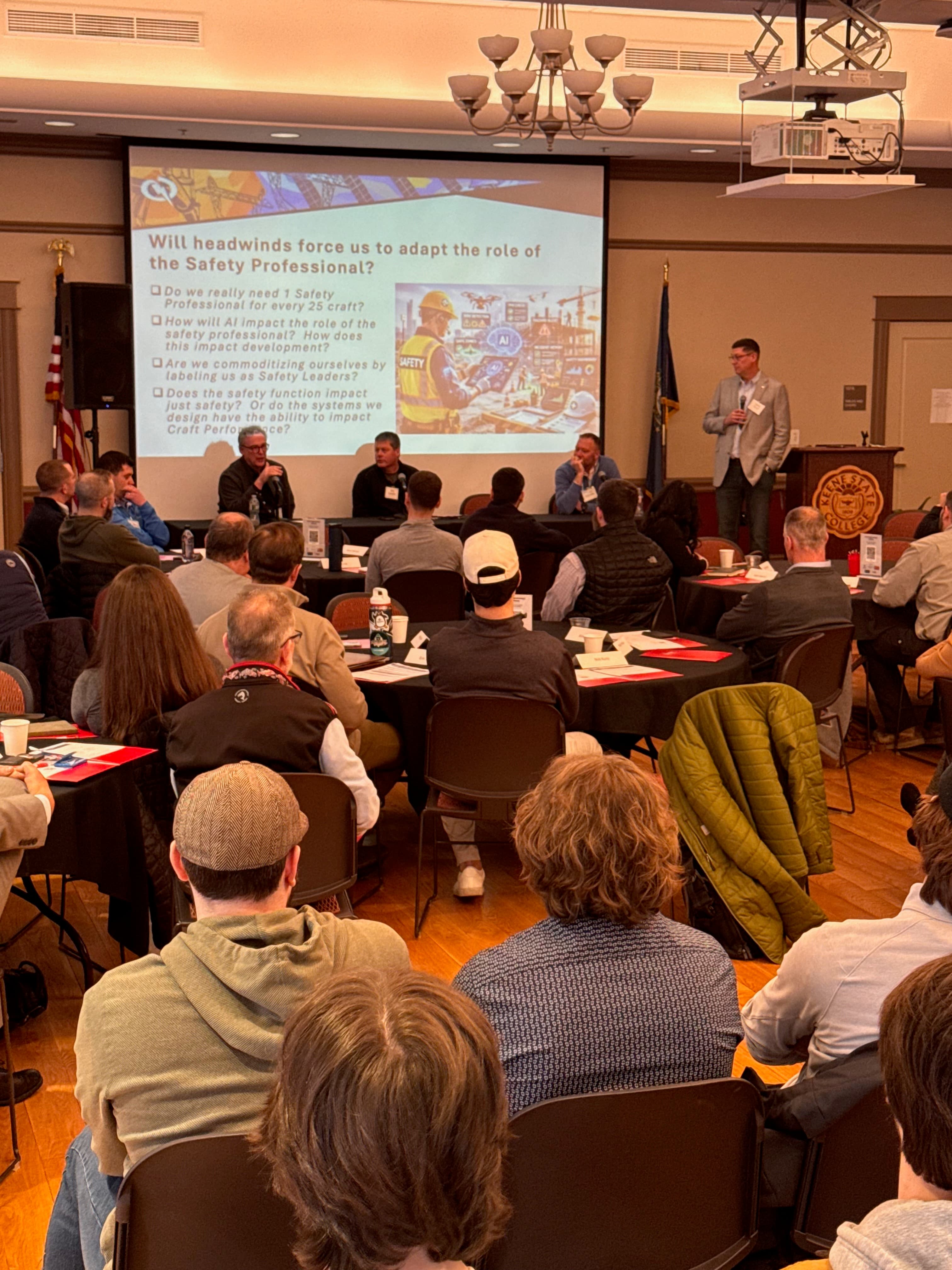
In March 2026, 60 safety leaders from over 30 companies gathered at Keene State College to address the future of occupational safety. Through candid discussions, they broke down silos between their organizations across high-risk industries. This report captures their honest outcomes, practical strategies, and actionable learnings.

Skill shortages, unrealistic expectations, and the loss of institutional knowledge are placing increasing strain on organizations and on the frontline people doing the work.

60
Safety leaders
9
Table discussions

A sincere thank you to the safety leaders who joined us. The insights contained in this report exist entirely because of your willingness to share the hard, honest truths of your operations.

Event sponsored by

Dimeo
Zurich
Keene State College
Sponsor 5
Quanta Services
David Flener

David Flener

VP of Safety Operations

Quanta Services

Bob Kunz

Bob Kunz

Corporate Safety Director

Dimeo Construction

Eric Lampert

Eric Lampert

Director

Zurich Insurance

Shaun Carvalho

Shaun Carvalho

Chief Safety Officer

Shawmut

Brady Keene

Brady Keene

Dept. Chair & Co-Founder

StepoAI

Executive summary

Bridging the gap in high-risk industries

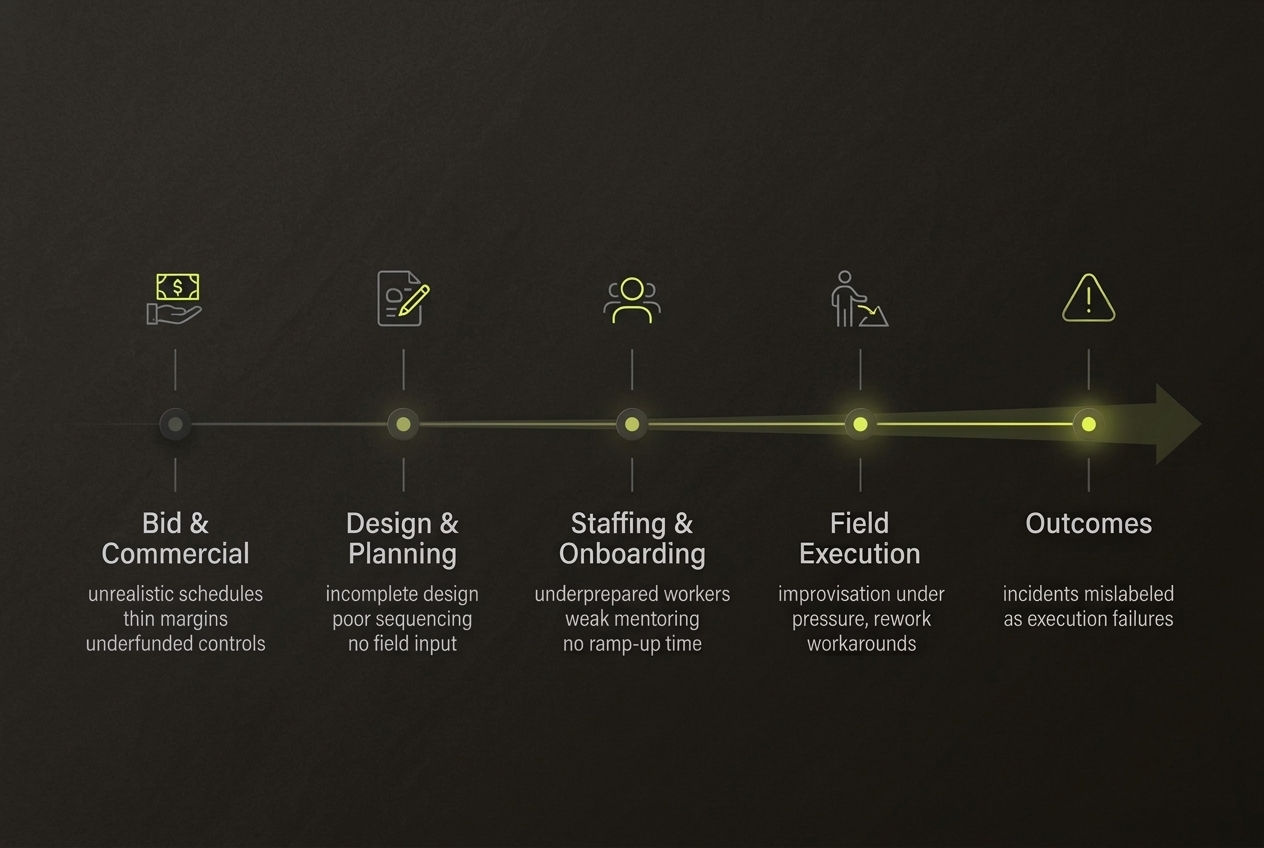
The workshop describes a structural safety problem, not a messaging problem: many field risks are being created upstream in bid, buyout, design, staffing, and schedule decisions, then mislabeled as execution failures.

1

Trust is a control system. Leaders lose credibility when they arrive late, inspect through apps, or collect feedback without closure; they gain it through start-of-work presence, direct conversation, and follow-through.

2

The industry is expecting plug-and-play performance from a workforce that is less experienced and less mentored than the work now requires. Weak onboarding, thin mentoring, and underdeveloped crew leaders are exposing apprentices, new hires, and younger leaders.

3

Technology and AI are leverage only if they reduce screen time and increase human engagement. Used as surveillance or as a substitute for conversation, they actively damage safety culture.

4

The labor model is tightening from both ends: a demographic cliff is shrinking the safety pipeline, while burnout and psychosocial strain are hurting retention. Firms will need broader, trade-connected pathways into safety leadership.

5

Open tensions

Where leaders still have choices to make

  • How much responsibility for workforce development should sit with unions, employers, and owners respectively.

  • How far firms should move away from degree- and credential-centered staffing models toward trade-based pathways.

  • How aggressively AI and observation technology should be deployed given the tension between efficiency and surveillance risk.

  • How directly executives should elevate wellbeing and psychosocial risk into core operating metrics rather than treating them as adjacent support topics.

Priority moves

Actions most likely to change outcomes

Move safety influence upstream into preconstruction, buyout, and design

If risk is designed in or priced out upstream, the field is forced into adaptation under schedule pressure. That is a predictable system failure, not a frontline weakness.Make safety review mandatory in bid review, buyout, major subcontractor onboarding, and constructability planning.
Build workforce readiness from onboarding through frontline leadership

New workers are entering systems that assume capability before it's built, while the frontline leaders responsible for developing them lack training in coaching, planning, and mentoring. When both layers are weak, safety becomes policing and crew climate deteriorates.Replace stand-alone orientation with a 30/60/90-day path tied to field coaching, and create a crew leader development program focused on coaching, difficult conversations, and hazard recognition.

Govern technology around conversation, not surveillance

When people feel watched rather than helped, openness drops, resistance rises, and the system confuses reporting activity with risk reduction.Set a rule that negative observations require a field conversation before logging, except for imminent danger situations.

Risk origin flow

The workshop's central finding: most field risk is designed in before work starts.
Create this as a refined editorial systems graphic in the style of Josef Muller-Brockmann's Swiss modernist information design: warm off-white paper background, charcoal typography, thin warm-gray rules, restrained geometry, generous whitespace, no icons, no 3D, no decorative illustration, no glossy effects, boardroom-report tone, typography-led and highly legible. Landscape orientation. Show five connected stages flowing left to right with slim arrows between them. Stage 1: Bid & Commercial — unrealistic schedules, thin margins, underfunded controls. Stage 2: Design & Planning — incomplete design, poor sequencing, no field input. Stage 3: Staffing & Onboarding — underprepared workers, weak mentoring, no ramp-up time. Stage 4: Field Execution — improvisation under pressure, rework, workarounds. Stage 5: Outcomes — incidents mislabeled as execution failures. Add one restrained annotation beneath: The workshop's central finding: most field risk is designed in before work starts.

Counterintuitive

What senior leaders may be underestimating

More safety data can make leaders less connected

Dashboards, apps, and observations can create the illusion of control while increasing distance from the work if they replace context, conversation, and field verification.

Implication

Treat digital reporting as support infrastructure, not proof of connected leadership. Require direct field engagement to validate what the data appears to say.

Safety gets weaker when it becomes the default fixer of every problem

A highly responsive safety team can unintentionally mask weak line ownership. The better model is for safety to influence, coach, and challenge while operations owns execution.

Implication

Redefine safety success from issue volume handled by safety to capability built and issues closed by the right operational owner.

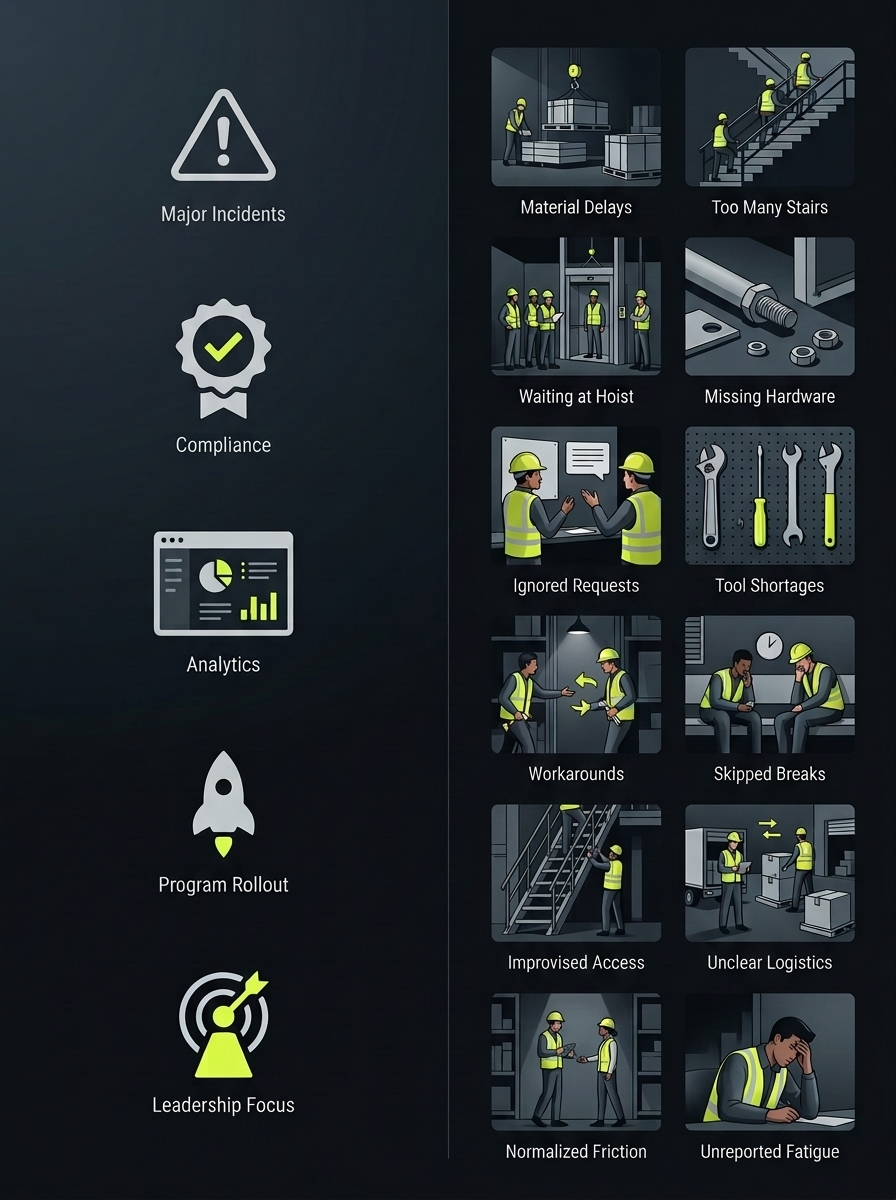
The biggest daily risks may not be in your risk register

While organizations focus on systemic fixes and strategic programs, field teams absorb a constant stream of small failures: material delays, hoist wait times, climbing seven flights of stairs for parts, unanswered requests. These compound into fatigue, frustration, and workarounds that normalize risk.

Implication

Audit the daily operational friction your teams experience, not just the incidents they report. The gap between what leadership monitors and what the field absorbs is where trust erodes fastest.

Rework is a safety indicator, not just a cost or quality issue

Rework, late changes, and out-of-sequence work create materially higher risk because crews move faster, improvise more, and absorb upstream errors under pressure.

Implication

Review rework hours and late changes as leading indicators of injury exposure, burnout, and upstream planning failure.

The Attention Gap

Most daily operational friction is completely invisible to the reporting systems designed to see risk. The distance between what leadership tracks and what the field absorbs is where incidents incubate.
Create this as a refined editorial systems graphic in the style of Josef Muller-Brockmann's Swiss modernist information design: warm off-white paper background, charcoal typography, thin warm-gray rules, restrained geometry, generous whitespace, no icons, no 3D, no decorative illustration, no glossy effects, boardroom-report tone, typography-led and highly legible. Landscape orientation. Attention-vs-reality gap diagram illustrating the disparity between what leadership monitors and what the field absorbs daily.

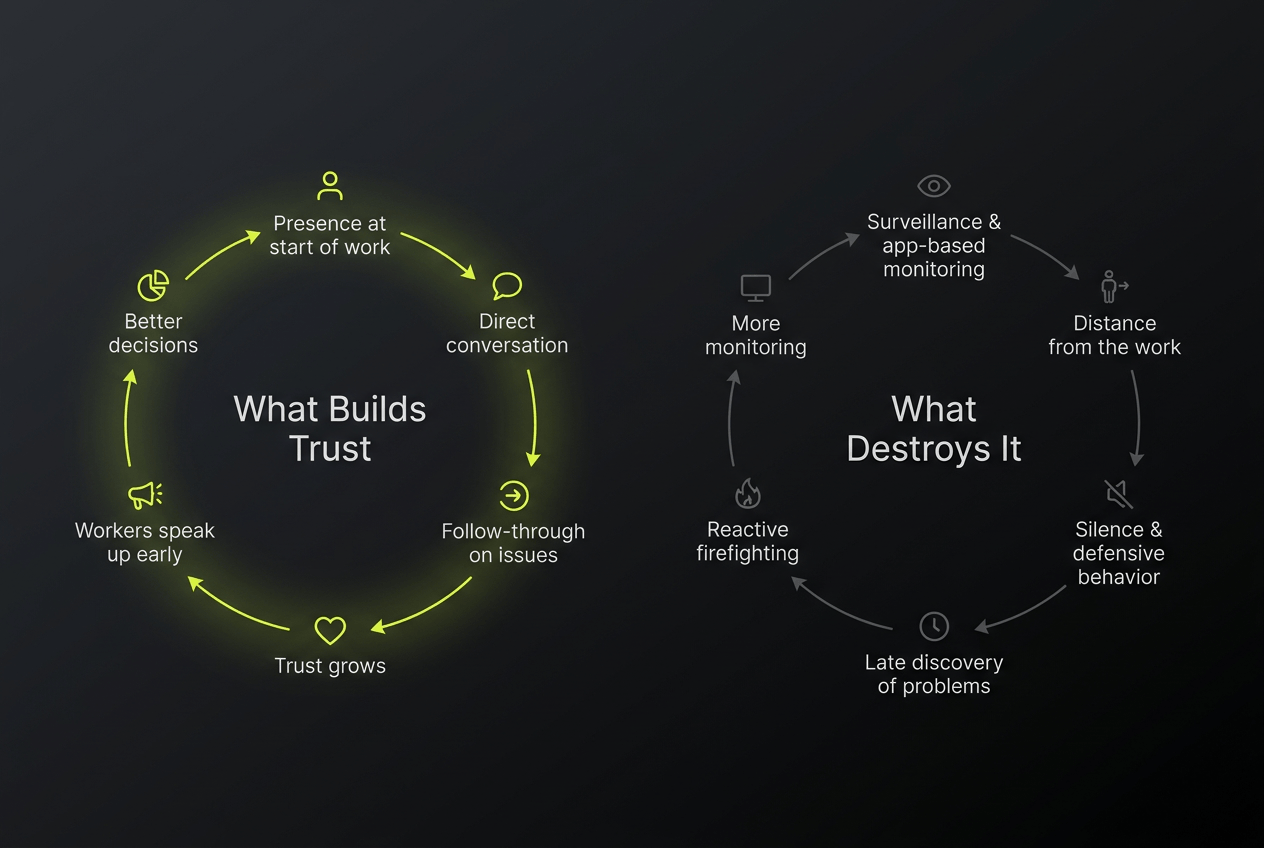
The Trust Cycle

A contrast of foundational behaviors that actively build field trust versus the reactive, defensive behaviors that silently erode it.
Create this as a refined editorial systems graphic in the style of Josef Muller-Brockmann's Swiss modernist information design: warm off-white paper background, charcoal typography, thin warm-gray rules, restrained geometry, generous whitespace, no icons, no 3D, no decorative illustration, no glossy effects, boardroom-report tone, typography-led and highly legible. Landscape orientation. Create two mirrored systems diagrams side by side. Left side label: What builds trust. Right side label: What destroys it. Trust-building cycle nodes: Presence at start of work, Direct conversation, Follow-through on issues, Trust grows, Workers speak up early, Better decisions. Trust-eroding cycle nodes: Surveillance and app-based monitoring, Distance from the work, Silence and defensive behavior, Late discovery of problems, Reactive firefighting, More monitoring. Use very short labels, elegant circular flow cues, and restrained tonal contrast between the two systems while keeping the same editorial palette.

Leading indicators

What to watch before loss events show up

Apprentice and first-year worker exposure

This is one of the clearest signals of whether onboarding, mentoring, and frontline coaching are actually functioning.

Watch for
  • Early-tenure incident rates rising faster than the rest of the workforce
  • Repeated similar errors by new workers
  • Projects with high apprentice percentages and weak mentoring

Rework and late-change volume

Rework is a reliable signal of upstream planning failure and elevated field pressure.

Watch for
  • Spikes in rework hours
  • Clusters of minor injuries during late changes or recovery work
  • Projects with repeated design churn and deteriorating crew morale

Younger leaders

What the next generation of safety leaders needs

Conflict management is a core early-career skill

Avoiding hard conversations weakens respect and allows hazards to persist; direct but respectful challenge builds trust.Train younger leaders early in de-escalation, coaching, and difficult feedback using real field scenarios.

Credibility comes from learning the work, not performing expertise

Younger leaders gain influence by watching work, asking questions, and understanding sequence and trade reality—not by acting certain too early.Create protected time to shadow superintendents, crew leaders, craft experts, and preconstruction teams before expecting full independent influence.

Do not confuse early promotion with readiness

Labor shortages are pushing younger leaders into responsibility faster than the development system can reliably support.Pair promotion with deliberate mentoring, structured field exposure, and regular review of decision quality rather than output alone.

Action & accountability

A practical response

Phase 01

Next 30 days

Immediate focus

  • Set an interim rule that negative observations require a field conversation before logging except for imminent danger, and issue interim AI/technology guardrails.
  • Audit onboarding, mentoring, and first-year worker exposure to identify where compliance completion is being mistaken for readiness.
  • Require senior leaders on selected projects to attend start-of-shift or pre-task planning and track participation.
1
Phase 02

Next 90 days

Building momentum

  • Redesign onboarding into a 30/60/90-day model with named mentors, observed work, and role-based support for new workers and new safety leaders.
  • Insert safety into formal preconstruction and buyout workflows, including review of high-risk sequencing, temporary works, and staffing assumptions.
  • Pilot voice-based or reduced-admin documentation tools specifically to increase time spent in field engagement.
2
Phase 03

Next 180 days

Systemic change

  • Establish a standing pre-bid or pre-award risk review that includes operations, safety, field leadership, and constructability input.
  • Scale a crew leader/frontline leadership academy and a structured shadowing pathway for younger safety leaders.
  • Build a hybrid safety talent pipeline drawing from trades, technical programs, and internal operational talent, not only degree-based hires.
3

Keyword explorer

What the room was talking about

A direct way to inspect the themes behind the report.

Tap any keyword to explore

Source material

Download the combined workshop transcripts

All transcripts have been anonymized. This download includes the 9 polished table transcripts together with the 2 shared report-out transcripts used in the report synthesis.

March 2026 Community Event | Stepo AI